7 Viva Questions That Trip Candidates in Every Discipline
The questions that fail candidates are not the broad ones about your field. They are the specific ones about your thesis. Page numbers, sample sizes, design decisions you but forgot about.
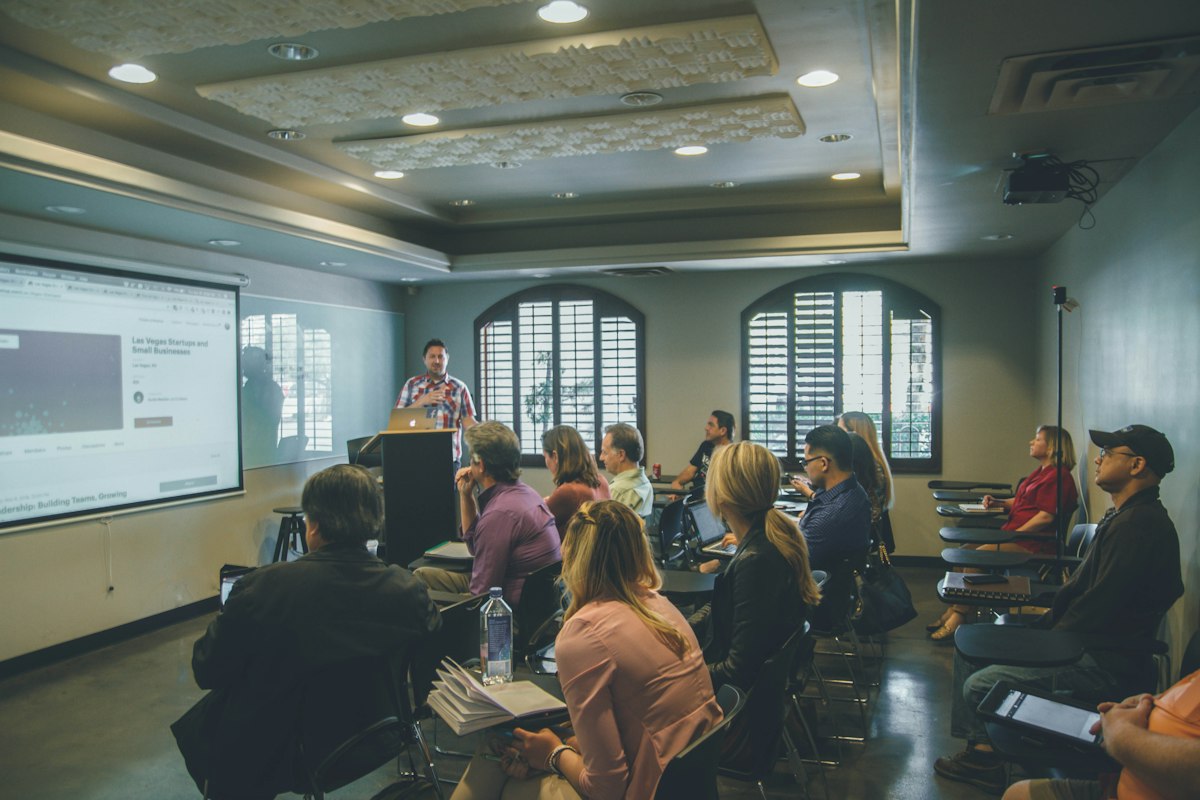
The questions candidates prepare for are not the ones that fail them
Rehearsing answers to broad questions is a natural place to start. “What is your contribution?” “Why did you choose this topic?” “How does your work fit in the field?” These questions do come up. They come up early, as warmers. They are the easiest to prepare for, because they are the questions a candidate has already thought about.
The questions that cause problems are the specific ones. They reference a page, a paragraph, a decision. They force the candidate to recall not just what they wrote, but why they wrote it that way and not another. Mullins and Kiley (2002) found that experienced examiners focus on the coherence between methodology and findings, the clarity of the research question, and whether the contribution claim is justified by the evidence. The broad questions test recall. The specific questions test understanding.
Here are seven patterns that examiners return to across disciplines. Each one is grounded in how examiners actually read theses, not in how candidates imagine they read them.
1. The sample-size justification question
“You have 38 participants. On page 134, you generalise to all early-career researchers. How do you defend that move?”
This question appears in almost every social science and education viva where a qualitative or small-sample quantitative study is used. The candidate chose a sample size for practical or methodological reasons (access, saturation, pilot constraints). The thesis then makes claims that exceed what the sample supports.
The fix is not to avoid generalisations. It is to know, before the viva, every place in the thesis where a claim reaches beyond the sample. Examiners do not object to bounded claims. They object to unbounded ones made without acknowledgement. Our guide to defending your sample size covers the rationales examiners accept.
Candidates who practice with Thesisroom’s mock viva module see these questions surface early because the tool reads the full thesis and identifies the specific passages where contribution claims are broadest.
2. The “why this method and not that one” question
“You used thematic analysis. Your research question asks about causal mechanisms. Why did you not use a method designed for causal explanation?”
This question tests whether the candidate chose a method because it was appropriate or because it was familiar. Examiners expect candidates to justify methodological choices against named alternatives. A candidate who cannot explain why they chose thematic analysis over grounded theory, or why they chose a cross-sectional survey over a longitudinal design, reveals a gap between execution and understanding.
The strongest answer names the alternative, explains why it was considered, and articulates why it was rejected in favour of the chosen method. Trafford and Leshem (2008) documented that examiners view methodological justification as one of the clearest signals of doctoral-level thinking.
3. The theoretical framework disconnect question
“Your theoretical framework is based on Bourdieu’s capital theory. In chapters four and five, you analyse your data using descriptive categories that do not reference Bourdieu at all. Where is the connection?”
This question surfaces when a candidate introduces a theoretical framework in chapter two and then abandons it during analysis. The framework sits in the literature review as a decoration rather than functioning as a lens through which data is interpreted.
Examiners read theses in chunks over days or weeks. When they reach the analysis chapter and the framework has vanished, they flip back to chapter two to confirm. The disconnect is then marked and becomes a line of questioning in the viva. Structural coherence between the framework and the analysis is one of the most common weaknesses Thesisroom’s structural critic flags during a chapter audit.
4. The missing limitations question
“What can your study not tell us?”
This is deceptively simple. Candidates who rehearse a polished answer about limitations often list generic constraints (small sample, single case, time limitations) without connecting them to the specific claims in their thesis. The examiner follows up: “Given those limitations, do you still stand by the claim on page 87?”
A strong limitations section names specific constraints and traces them to specific claims. A weak one reads as a disclaimer bolted onto the end of the thesis. Examiners notice the difference.
5. The citation-under-pressure question
“You cite Johnson (2018) seven times in your literature review. Can you summarise what Johnson actually found, in your own words?”
This question checks whether the candidate read the source or borrowed it from another paper’s reference list. Secondary citation (citing a paper through another paper’s mention of it) is common in literature reviews. It is not misconduct, but it is a weakness. An examiner who suspects secondary citation will pick the most-cited source and ask the candidate to speak about it in detail.
If the candidate cannot, every other citation in the chapter becomes suspect. This is where citation guard adds value beyond verification: by flagging which citations carry the heaviest weight in the argument, it helps the candidate identify which sources they must be able to discuss fluently.
6. The contribution overclaim question
“You say this is the first study to examine X in the context of Y. How did you verify that claim?”
First-to-study claims are among the most commonly challenged statements in a viva. The examiner may have found a prior study the candidate missed. The examiner may know of unpublished work in the field. The examiner may simply want to test whether the candidate searched rigorously enough to make such a strong claim.
The safest approach is to qualify the contribution claim before the viva: “To the best of my knowledge, this is the first study to examine...” If the examiner produces a prior study, the candidate can acknowledge it gracefully. If the claim is unqualified and the examiner produces a counter-example, the candidate is caught in an overclaim they have to retract publicly. For the broader version of this question, see our guide to the contribution to knowledge question.
7. The “what would you do differently” question
“If you were starting this study today, with the same research question, what would you change about the design?”
This question appears near the end of most vivas and feels open-ended. It is not. The examiner is testing whether the candidate has genuine critical awareness of their own work, or whether the thesis presents a false confidence that nothing could be improved.
Candidates who answer “I would not change anything” signal a lack of reflective thinking. Candidates who list ten changes signal a lack of confidence in what they did. The strong answer names one or two specific changes, explains why they matter, and connects them to something the candidate learned during the research process that was not available at the start. All seven patterns are worth saying out loud before the day, so practise these in a mock viva with a reader who has read your thesis.
Why generic question banks do not prepare you
The seven patterns above share a common trait: each one requires the candidate to reference specific pages, decisions, and claims in their own thesis. A generic question bank cannot generate these. “Defend your methodology” is not the same question as “On page 78, you chose purposive sampling but on page 82 you describe your recruitment as convenience-based. Which one is it?”
The specificity is what makes viva preparation different from exam preparation. In an exam, you study the material. In a viva, you study your own work. That includes the first minute: a rehearsed viva opening statement sets up the specific questions that follow.
Thesisroom’s mock viva module reads the full thesis and generates questions anchored to specific passages. The questions reference page numbers, quote claims, and name the attack vector. The method page describes how this works and why every question includes a source anchor.
Frequently asked questions
How many questions are typically asked in a viva?
Most doctoral vivas run ninety minutes to three hours. Examiners typically ask between fifteen and thirty questions, though the number depends on the discipline, the thesis length, and how the conversation develops. UK vivas with two examiners tend toward the shorter end. Continental European and US defenses with larger panels run longer.
Do Master’s viva questions follow the same patterns?
Yes, though the expectations are calibrated to the degree level. A Master’s examiner probes methodology and contribution claims with the same question patterns but expects a proportionally shorter and less theoretically dense response. The seven patterns described in this post apply at both levels.
Can I prepare for viva questions by reading other people’s viva reports?
Published viva reports and post-viva reflections give you a sense of the tone and pacing. They do not prepare you for the specific questions about your own thesis. The questions that matter are about your pages, your decisions, your claims. Generic preparation helps with confidence. Specific preparation helps with answers.
What if my supervisor does not have time to run a mock viva?
This is one of the most common complaints among candidates approaching their defense. Supervisors are busy, and a meaningful mock viva requires the examiner to have read the thesis. Thesisroom’s mock viva module reads the full thesis and generates examiner-grade questions without requiring a supervisor’s time. The questions are anchored to your specific work, not drawn from a generic bank.
Should I memorise answers to likely viva questions?
Memorisation is counterproductive. Examiners follow up on your answers with further probing. A memorised response that does not adapt to the follow-up question signals rehearsal rather than understanding. Instead, prepare by knowing your thesis well enough to locate any claim, explain any decision, and acknowledge any limitation without notes.
What is the most common reason for receiving major corrections after a viva?
The most common reasons are methodology-results misalignment, overclaiming relative to the evidence, and insufficient engagement with the literature. These are structural issues, not surface-level errors. They correspond to question patterns 2, 6, and 5 in this post.
Know the questions before they are asked
The viva is the one moment in a doctoral or Master’s candidacy where the work is tested live, in real time. The preparation that matters most is not broad reading or generic rehearsal. It is the careful identification of the specific places in your own thesis where an examiner will press.
Thesisroom exists for this preparation. The 3-Month Plan at $35 for three months gives full access to Defense Practice, Citation Check, Chapter Audit and Find Sources for the weeks that matter most.
References
Mullins, G., & Kiley, M. (2002). “It’s a PhD, not a Nobel Prize”: How experienced examiners assess research theses. Studies in Higher Education, 27(4), 369-386.
Trafford, V., & Leshem, S. (2008). Stepping stones to achieving your doctorate: By focusing on your viva from the start. Open University Press.