How to Prepare for a Thesis Defense: A 5-Stage Plan Examiners Respect
Generic question lists prepare you for the wrong questions. Examiners arrive with a preliminary report and a shortlist of marked passages. Here is the defense preparation plan that meets them where they read.
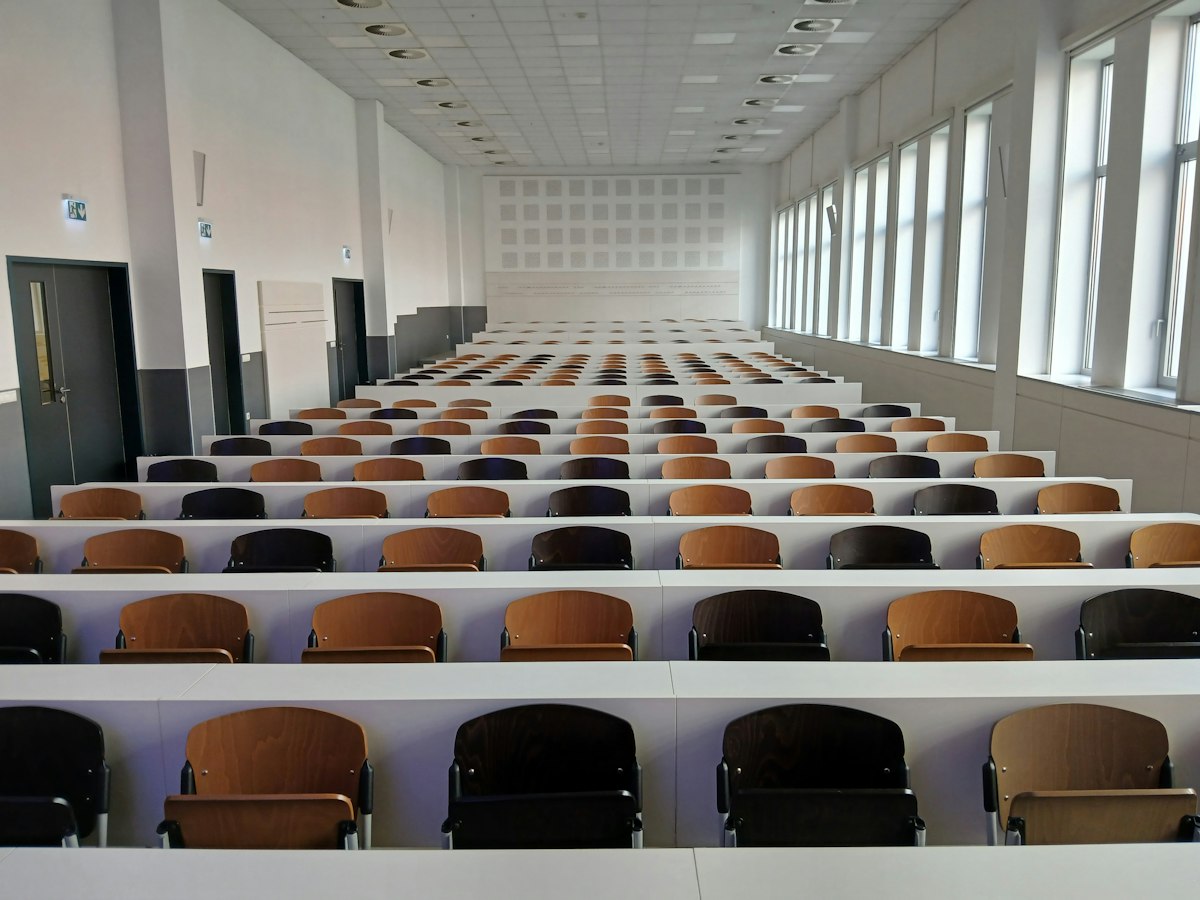
The panel is not asking the questions you rehearsed
Scanning generic viva question lists and running through them with a friend at a coffee shop is not enough preparation for a thesis defense. That preparation matches almost none of what happens in the room. Examiners arrive with two things you cannot see: a preliminary report they have already written after reading the thesis, and a working shortlist of passages they intend to raise (Trafford & Leshem, 2008). The questions on the day come from those passages, not from a public list.
Learning how to prepare for a thesis defense means learning to read your own thesis the way the panel already has, before you sit at the table. The rest of this piece walks the five stages that get you there, without asking anyone to lie about your work or memorise a script.
Why “preparation” is bigger than a rehearsal weekend
Mullins and Kiley (2002) interviewed 30 experienced examiners across five universities. Most examiners in that study formed a strong first impression from the thesis structure, the reference list, and the opening chapter within the first hour of reading. That first impression sets the questions. It also sets the tone: examiners who read a tidy thesis approach the viva as a discussion, and examiners who read a scattered one approach it as a diagnosis.
That gap explains why late-stage panic prep rarely works. If the manuscript handed in for examination is uneven, no amount of Q&A rehearsal in the final week will change the impression forming inside the examiner’s head as they read chapter one. Preparation has to run backwards from the defense day into the writing months. Our guide on when to start preparing puts that start in year one. This is why the Thesisroom method treats a second reader as a whole-degree seat, not a final-weeks visitor.
Stage 1: Read your own thesis as a stranger would
Print the full manuscript. Sit somewhere that is not your desk. Read it end to end with a pen in hand. The goal is not to notice typos. The goal is to notice where your argument shifts and you cannot say why, where a claim rests on a citation you cannot remember reading, and where a chapter ends without connecting to the next.
Mark those passages by page number. These are the passages the examiners will find. Trafford and Leshem’s (2008) study of 25 doctoral vivas showed that examiners ask specific, textually anchored questions far more often than abstract theoretical ones. Your job is to get to those anchors before the panel does.
A common failure at this stage is skimming. If you already know the thesis, you will read the argument you meant to write, not the one on the page. To force a slower read, ask yourself after each section what a reader who has never met your topic would still not understand. That is the question your examiner will phrase as: “Can you explain what you mean by...” Our guide on how to read your thesis like an examiner sets out four passes for this read.
Stage 2: Anchor every claim to the passage that makes it
For every load-bearing claim in your thesis, write a two-sentence justification and the page it appears on. Load-bearing means claims a reader must accept for your contribution to stand. That includes your definition of the phenomenon, your case for your method, your interpretation of the central finding, and the boundary of what you are claiming.
A psychology candidate who ran a cross-sectional survey of 214 participants, for example, should be able to say on the day: “The design is on page 88. It answers the research question rather than the causal one, which is why the analysis stops at association.” That is the level of specificity Mullins and Kiley (2002) describe as separating a strong candidate from a merely competent one.
Do this for the methodology chapter first. Examiners open the methodology chapter early and read it slowly. If a methodological choice is defended in the chapter, an examiner may still ask about it, but the question shifts from a challenge to a check. If the choice is only implied, the question turns into a challenge every time.
Stage 3: Verify every citation, then verify them again
Every viva has a citations question. Sometimes it is direct: “Why did you cite Author X for this claim?” More often it is structural: “You lean on the 2018 framework here; what has the literature done with it since?” You cannot answer either question if a source in your bibliography turns out to be misattributed, retracted, or fabricated.
Fabricated citations are no longer a marginal problem. An audit by Topaz and colleagues (2026) in The Lancet found fabricated references in one of every 277 papers indexed in PubMed in early 2026, up from one in 2,828 in 2023. That is roughly a tenfold rise in three years. Doctoral bibliographies drawn from AI-assisted drafts carry the same risk. Working through your reference list one Crossref lookup at a time is slow and correct. Doing it at scale, across a full thesis, is what Thesisroom’s citation guard does, drawing on ten registries.
Two rules cover the whole task. First, if the DOI does not resolve, the citation is wrong until proven otherwise. Second, a source verified during your literature review still needs re-checking before submission: papers get retracted after they are cited, and no reference manager surfaces that. For the whole list, run a five-pass reference list check before the defense.
Stage 4: Rehearse questions that come from the text
Generic viva question lists exist because they are easy to publish. They rarely produce useful practice because examiners rarely ask them in generic form. A better practice is anchored: pick a page, read the passage aloud, and then ask yourself the question the passage invites. “You claim on page 47 that these two frameworks are compatible. Say more.”
Do this for twenty passages spanning your chapters. Record your answers. Play them back. Note the ones where you drifted, hedged, or reached for filler. Those are the passages to rehearse next. Wisker (2012) recommends rehearsing out loud rather than in your head, because the working of the answer under time pressure is what the panel is watching for.
If you do not have a colleague in the field who can sit and ask these questions, the panel’s silence in rehearsal becomes a real problem. This is where Thesisroom’s mock viva coach fits: it reads your thesis, generates examiner-grade questions anchored to specific passages, and scores your answers on clarity, depth, and accuracy. It works on a single chapter for early-stage practice and on the full thesis when you are close.
Stage 5: Prepare your one-minute contribution answer
Almost every viva opens with a variant of “Tell us about your research.” Candidates who freeze at this question have not chosen a single-sentence claim to lead with (Trafford & Leshem, 2008). Candidates who ramble at it have chosen too many.
Write out your contribution in one sentence. Then write the one-minute version that opens it out: the problem, the gap in the literature, your specific move, and what the finding lets a reader do that they could not do before. Rehearse until you can deliver it without notes. This becomes the anchor for the whole conversation. Every later question is easier when you have a settled framing to return to. If your defense opens with a talk, build a dissertation defense presentation, slide by slide around the same sentence. Then annotate your thesis for the viva so you can reach any page at once.
What Thesisroom does with this
Thesisroom is a defense preparation seat that runs across the whole degree. The mock viva coach reads the thesis or a single chapter and generates examiner-grade questions anchored to specific passages, then scores each answer on clarity, depth, and accuracy. The citation guard runs on the bibliography at any stage, from a first-year literature review to the final submission, and re-checks entries as new retractions appear. The full module set is one page.
None of this writes the thesis. The role is a second reader: it reads the work, questions it like an examiner, and verifies every source, so the writing and the thinking stay yours. Our introduction explains how Thesisroom prepares you for the defense.
Frequently asked questions
How many weeks before my viva should I start preparing?
Structured preparation starts as soon as you submit for examination, which for most UK doctoral candidates is six to eight weeks before the viva. Early-stage preparation, meaning the reading and citation habits described here, starts in year one. Cramming in the final week rarely changes the impression an examiner has already formed from reading the thesis.
Do examiners really read the whole thesis?
Yes. External examiners in the UK, Australia, and most European systems are required to read the full thesis and submit a preliminary report before the oral examination (Tinkler & Jackson, 2004). The questions in the room are drawn from that report and from passages the examiner marked while reading.
Can I prepare for a viva by myself?
You can prepare the material by yourself, but rehearsing questions with no reader present is limited. The gap is not the questions, it is the follow-up. A real examiner does not accept a first answer and move on, they push. Solo preparation covers the answer, not the pressure.
What is the single most useful preparation habit?
Anchoring. For every major claim in the thesis, know the page it sits on and the two-sentence justification for it. Examiners ask specific questions grounded in specific passages, and the candidates who answer well are the ones who can find the page and the reasoning together.
How do I prepare for questions I cannot predict?
You do not predict them. You prepare the sources they will come from: the methodology chapter, the boundary of your contribution claim, and the passages where your writing shifted mid-argument. Questions that feel unpredictable to the candidate almost always come from passages the examiner marked while reading.
Can a tool generate viva questions from my own thesis?
Yes. The Mock Viva Coach reads the thesis or a single chapter and generates examiner-grade questions anchored to specific passages. Each question shows the page it was drawn from, and answers are scored on clarity, depth, and accuracy. It replaces the generic list with questions that could actually come up in your room.
One takeaway if you only have a weekend
Print the thesis. Read it with a pen. Mark every page where a load-bearing claim is made and write the two-sentence justification for that claim in the margin. This one habit does more work than any generic question list, because it puts you in the same reading position as the examiner one week before they take their own seat. When you are ready to test the answers against real examiner questions from your own text, Thesisroom’s mock viva coach is where the anchored practice lives.
References
Mullins, G., & Kiley, M. (2002). ‘It’s a PhD, not a Nobel Prize’: How experienced examiners assess research theses. Studies in Higher Education, 27(4), 369-386.
Tinkler, P., & Jackson, C. (2004). The Doctoral Examination Process: A Handbook for Students, Examiners and Supervisors. Open University Press.
Topaz, M., et al. (2026). Analysis of fabricated references in PubMed-indexed literature. The Lancet.
Trafford, V., & Leshem, S. (2008). Stepping Stones to Achieving your Doctorate: Focusing on Your Viva from the Start. Open University Press.
Wisker, G. (2012). The Good Supervisor (2nd ed.). Palgrave Macmillan.